Controlled Environment Agriculture Seeds

JEPCO Expands Indoor Leafy Salad Production

JEPCO is increasing glasshouse capacity to combat outdoor risks like climate change, pests, and soil contamination.
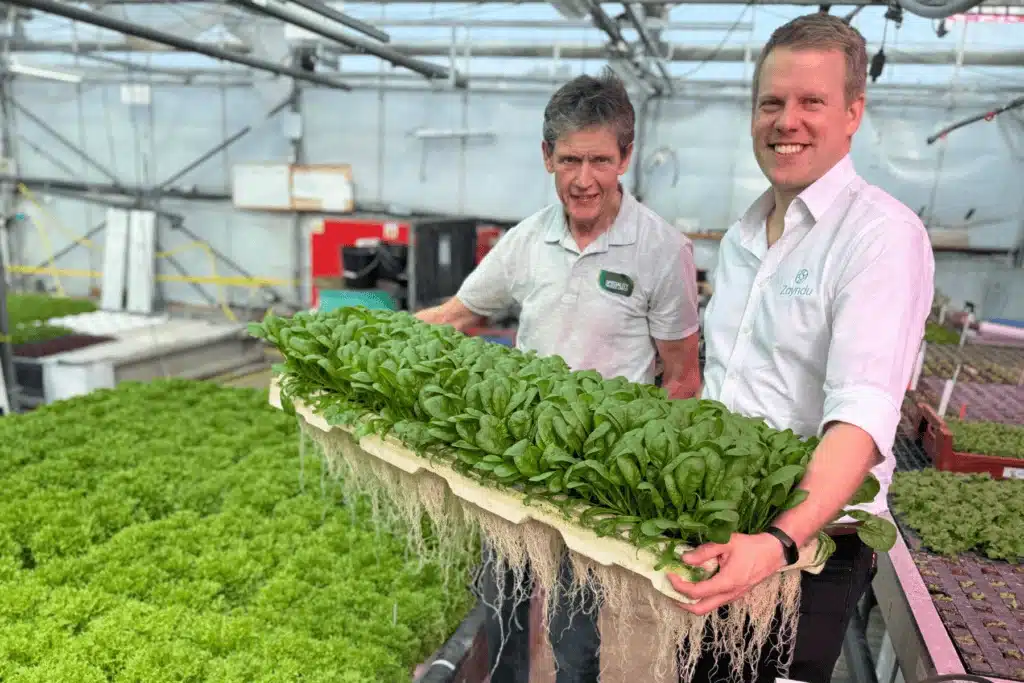
Image provided by Zayndu.

Key Takeaways

  • Transition to Indoor Growing: JEPCO is increasing glasshouse capacity to combat outdoor risks like climate change, pests, and soil contamination.
  • Technological Integration: The company is utilizing Zayndu’s ActivatedAir plasma seed priming to accelerate germination and increase annual crop cycles.
  • Yield Improvements: Internal trials at JEPCO showed reliable yield increases of 11% for spinach and 13% for rocket.
  • Sustainability Goals: The shift aims for year-round, 52-week production with a target of reaching carbon neutrality.

JEPCO Strategic Shift to Controlled Environments

Lincolnshire-based JEPCO, a third-generation leafy salad producer managing 800 hectares of outdoor crops, is significantly increasing its glasshouse production capacity. This move is a direct response to the diminishing availability of traditional pest and weed control tools and the increasing frequency of extreme weather events.

By shifting production into controlled environments, JEPCO aims to mitigate risks associated with climate change, such as unpredictable wet periods and hail. Furthermore, indoor systems allow the producer to eliminate common field issues like aphid infestations and soil splashing, the latter of which often requires vigorous washing that can reduce the shelf life of the produce.

Optimizing Output through Technology

The transition involves a heavy focus on research and development. JEPCO has established an in-house development team and research facility to identify innovations that justify the capital investment required for glasshouse expansion. A primary goal is to ensure consistency and quality, particularly for the catering and sandwich-production markets where non-conformities must be kept to a minimum.

“Our goal with indoor production is to be carbon neutral, produce 52 weeks of the year and mitigate a lot of the risks we take outdoors with climate change,” says Richard Pett, development manager at JEPCO. “Since moving our lettuce production destined for sandwiches indoors, we have almost eliminated non-conformities.”

JEPCO Partners with Zayndu for Seed Priming

A central component of JEPCO’s new strategy is the trialing of Zayndu’s ActivatedAir plasma seed priming. This Loughborough-based technology uses cold plasma to create microfissures in the seed surface, increasing water absorption and stimulating biochemical pathways for faster germination.

Nathanael Dannenberg, UK and North America business development manager for Zayndu, explains that the process is entirely pesticide-free. For JEPCO, the primary benefit is the reduction in time to harvest. By shortening the growth cycle, the company can potentially fit additional crop cycles into a single calendar year, maximizing the utility of their glasshouse space.

“The results are reliable; we are seeing a difference every time, which is exciting,” says Pett regarding the trials. “You take 11-13% from priming the seed, perhaps another 3% from adding a biome to the water in the hydroponic system, plus other measures, and it all adds up.”

administrator
As a dedicated journalist and entrepreneur, I helm iGrow News, a pioneering media platform focused on the evolving landscape of Agriculture Technology. With a deep-seated passion for uncovering the latest developments and trends within the agtech sector, my mission is to deliver insightful, unbiased news and analysis. Through iGrow News, I aim to empower industry professionals, enthusiasts, and the broader public with knowledge and understanding of technological advancements that shape modern agriculture. You can follow me on LinkedIn & Twitter.

Leave a Reply