
Key Takeaways
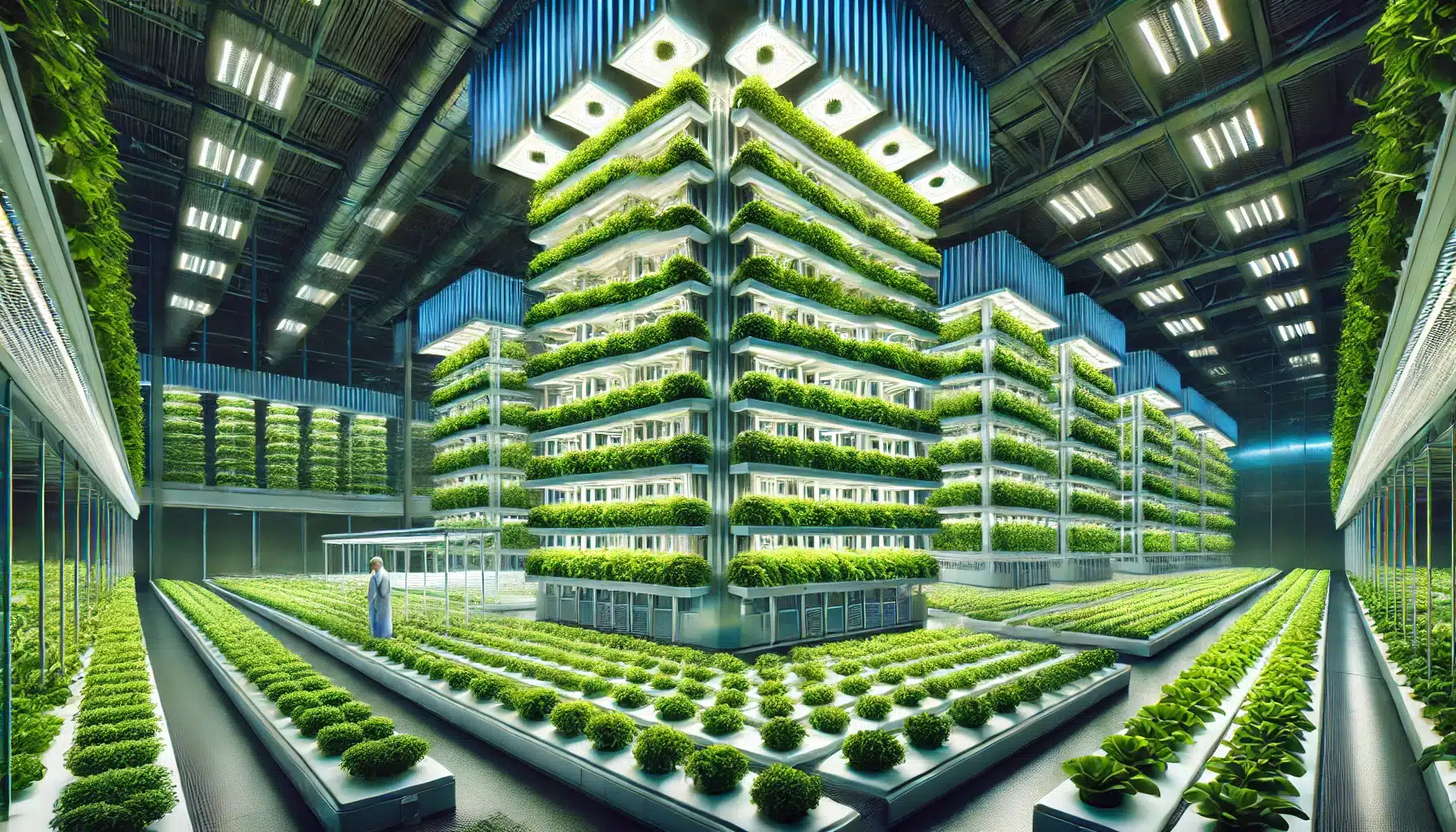
- Vertical farming grows crops in stacked layers within controlled environments.
- By utilizing vertical space, this method can boost land-use efficiency, making it possible to grow more food per square foot—particularly valuable in urban and high-density regions. Water usage can be minimized through closed-loop irrigation systems, and the controlled environments drastically reduce the need for synthetic pesticides, promoting cleaner crop production.
- Despite its benefits, vertical farming faces notable hurdles such as substantial upfront investment in infrastructure, high operational costs tied to energy consumption for lighting and climate control, and a narrow range of economically viable crops.
- In response to these challenges, recent innovations have targeted cost-reduction strategies, explored the integration of vertical farms with greenhouse models, and expanded production to include crops beyond leafy greens to improve scalability and profitability.
- Vertical farming is increasingly recognized as a key component of the AgTech sector, supporting global efforts to build resilient food systems, particularly in areas where traditional agriculture is limited by space, climate, or resources.
What is Vertical Farming?
Vertical farming is an agricultural method that involves growing crops in vertically stacked layers, often in controlled indoor environments. This method utilizes techniques such as hydroponics, aeroponics, and aquaponics, which enable consistent food production with controlled resource use.
While the concept of cultivating food in tall structures can be traced back to early visions like those published in Life Magazine in 1909—featuring vertically stacked homesteads and theoretical skyscrapers envisioned as utopian food production sites—architectural proposals began materializing throughout the 20th century. Early contributions included Le Corbusier's Immeubles-Villas (1922), SITE's Highrise of Homes (1972), and tower hydroponicums documented in The Glass House by John Hix. Armenia was home to some of the first operational tower hydroponic units, marking practical beginnings for vertical food cultivation systems.
Technological developments in greenhouse and hydroponic systems set the stage for vertical farming as it is known today. Visionary architects like Ken Yeang and design studios like MVRDV proposed bioclimatic skyscrapers and urban farming towers through the 1990s and early 2000s. These works bridged the gap between architecture and agriculture, influencing the design of food-producing buildings in metropolitan areas.
Additional Resources
- Latest Vertical Farming News
- Indoor Vertical Farming Insights
- For tailored market intelligence, investment mapping, or benchmarking of automation trends, visit iGrow News Research Services.

