
Key Takeaways
- PepsiCo and TalusAg have announced a low-carbon ammonia environmental attribute agreement covering approximately 30,000 metric tonnes with an option for an additional 41,000 metric tonnes.
- The initial agreements span PepsiCo's Europe, Sub-Saharan Africa, Asia Pacific, and global teams, with broader collaboration extending to the U.S. and a proposed Blue Earth, Minnesota project.
- The deal uses a book-and-claim model, where environmental attributes are tracked separately from physical fertilizer flows.
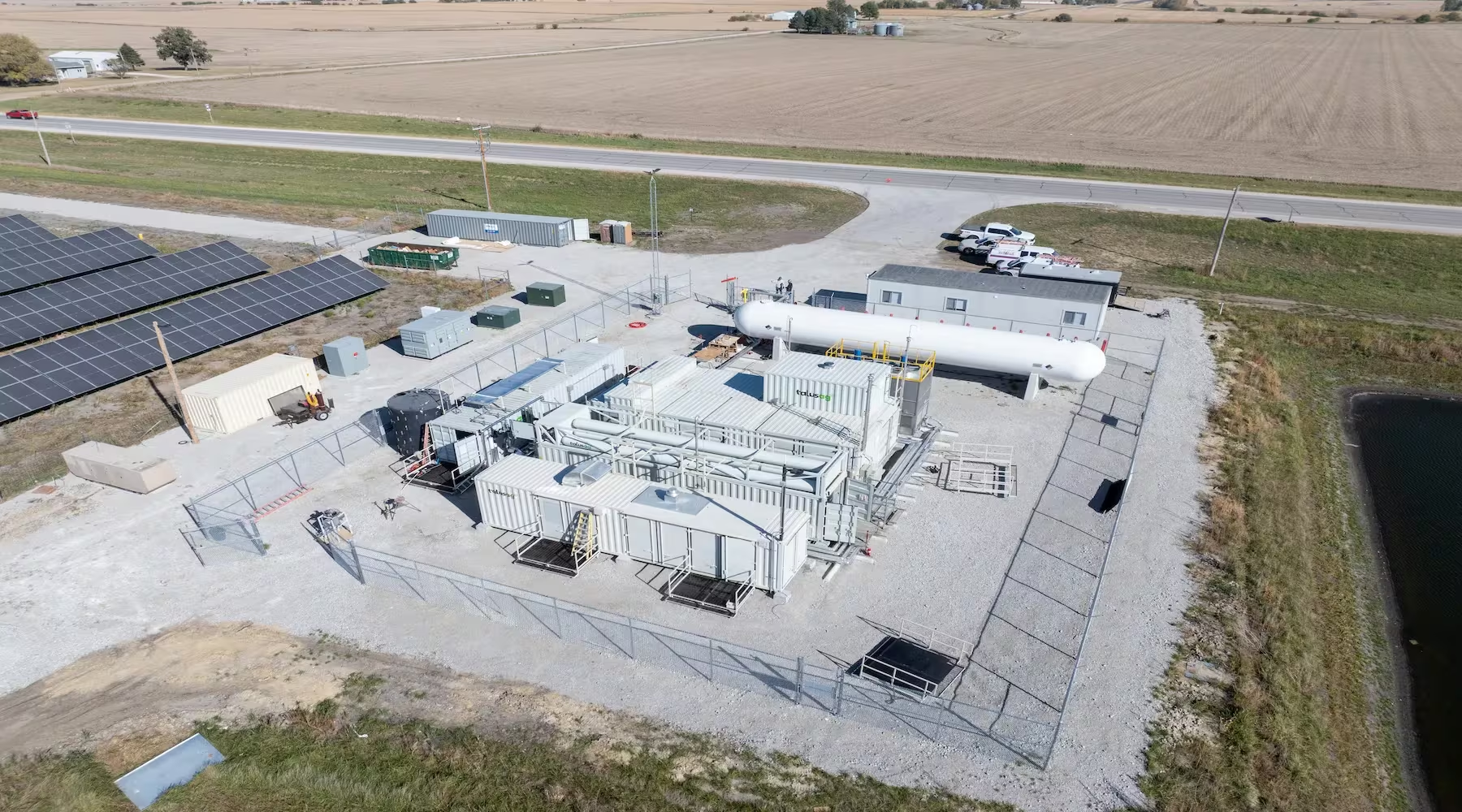
- S3 Markets will manage what the parties describe as the world's first tokenized ammonia fertilizer EACs, sourced from TalusAg's Boone, Iowa project.
- TalusAg currently operates distributed green ammonia production systems in the U.S., Kenya, and Spain.
PepsiCo Makes First Move Into Low-Carbon Ammonia Attribute Markets
PepsiCo (NASDAQ: PEP) has announced a collaboration with agriculture technology company TalusAg to advance fertilizer decarbonization across global agricultural supply chains through low-carbon ammonia environmental attributes. The announcement marks PepsiCo's first executed transactions of this kind, with initial agreements covering approximately 30,000 metric tonnes of low-carbon ammonia across PepsiCo's Europe, Sub-Saharan Africa, Asia Pacific, and global teams, and an option for an additional 41,000 metric tonnes. The broader collaboration also extends to U.S. operations and TalusAg's proposed Blue Earth, Minnesota project.
Book-and-Claim Model Enables Near-Term Action
Fertilizer production is among the most emissions-intensive and hard-to-abate components of global food systems. TalusAg's approach enables companies to purchase verified low-emissions ammonia environmental attributes through a book-and-claim model, where the environmental attribute is tracked separately from the physical fertilizer flow, allowing near-term auditable emissions reductions while physical low-carbon supply chains continue to develop.
Margaret Henry, PepsiCo Vice President of Sustainable and Regenerative Agriculture, said the agreement is designed to create a demand signal for low-emissions ammonia while supporting more stable input economics for growers and the long-term transition of the fertilizer market.
World's First Tokenized Ammonia Fertilizer EACs
S3 Markets will provide Environmental Attribute Certificate lifecycle management for the issuance, tracking, and retirement of what the parties describe as the world's first tokenized ammonia fertilizer EACs, sourced from TalusAg's Boone, Iowa project. Hiro Iwanaga, CEO of TalusAg, said the global collaboration demonstrates how credible market-based mechanisms can help build supply chain reliability, lower fertilizer costs for local farmers, and accelerate investment in low-emissions fertilizer production.
TalusAg Distributed Model Targets Supply Chain Resilience
TalusAg's distributed production model enables local, on-site generation of ammonia closer to where it is used, reducing reliance on centralized global supply chains and mitigating geopolitical, logistics, and price volatility risks. The company operates production systems in the U.S., Kenya, and Spain, and describes its approach as lowering transportation emissions and costs while improving food system resilience over the long term.

