Research

Research

The ‘Research’ category on iGrow News is an essential segment that delves into cutting-edge studies, experiments, and findings in the realm of agricultural technology. This category is specially curated to provide readers with an in-depth look at the latest scientific research and developments that are driving innovation in the agricultural sector.

Central to this category is the coverage of groundbreaking studies and experiments in agriculture technology. This includes research on advanced farming techniques, crop genetics, soil science, and sustainable agriculture practices. The category highlights how these studies contribute to enhancing crop productivity, improving environmental sustainability, and addressing global food security challenges.

Innovations in agricultural technology are a key focus of the ‘Research’ category. It features insights into the development of new technologies such as precision agriculture tools, biotechnological advancements, and climate-resilient farming practices. The category examines how these technologies are tested and refined through scientific research, demonstrating their potential to transform agricultural practices.

The category also explores the findings from various research initiatives. This includes analysis of data from field trials, laboratory experiments, and case studies. By presenting these findings, the ‘Research’ category aims to inform and educate its readers on the efficacy, benefits, and potential drawbacks of different agricultural technologies and practices.

By offering a comprehensive overview of the latest research in agricultural technology, the category serves as a valuable resource for farmers, agronomists, researchers, and policy makers. It aims to foster a deeper understanding of the scientific advancements in agriculture and their practical applications, thus contributing to the advancement of the agricultural sector.

Chloros Publishes Quantum-AI Study on Tomato Ripeness Detection

Chloros published an SSRN preprint pairing YOLOv8 with a four-qubit quantum circuit that hit 93.80% accuracy on tomato ripeness classification.

Read More

Los Alamos National Laboratory ZiaCore Microreactor Achieves Criticality

Los Alamos National Laboratory's ZiaCore microreactor has achieved zero-power criticality, a benchmark that confirms the reactor performs as designed. The New Mexico Nuclear Alliance said the demonstration marks a major step in advanced reactor development and reinforces the state's role in next-generation nuclear technology.

Read More

Pusan National University Study Advances Solar Desalination With Janus Membrane

Pusan National University researchers developed a hydrogel membrane that cleans and desalinates seawater at the same time using sunlight.

Read More

Locus Agriculture Ties Yield Gains to “Stress Economics” in New Bombigro Trial Data

Locus Agriculture, an Ohio-based maker of agricultural biological inputs, said new field trial data shows its foliar product Bombigro delivered average yield increases of 5% to 7% across six major crops. The company is promoting the findings under a framework it calls "stress economics," meant to help growers weigh crop input decisions against tightening margins.

Read More

Desert Control’s Liquid Natural Clay Lifts Romaine Lettuce Yields Up to 34% in Salinas Valley Trials

Desert Control (Oslo Stock Exchange: DSRT), a liquid clay soil amendment maker, said two commercial field trials with a large specialty crop grower in California’s Salinas Valley produced measurable yield and profit gains in romaine lettuce after Liquid Natural Clay (LNC) applications. The trials ran on underperforming sandy loam ground with 64% sand content.

Read More

Tianjin University Catalyst Boosts Solar-Powered Ammonia Production More Than Fourfold

Key Takeaways Researchers at Tianjin University developed a new photocatalyst that uses sunlight to convert nitrogen from the air into ammonia more efficiently, using a metal-nonmetal co-doping strategy. The catalyst, […]

Read More

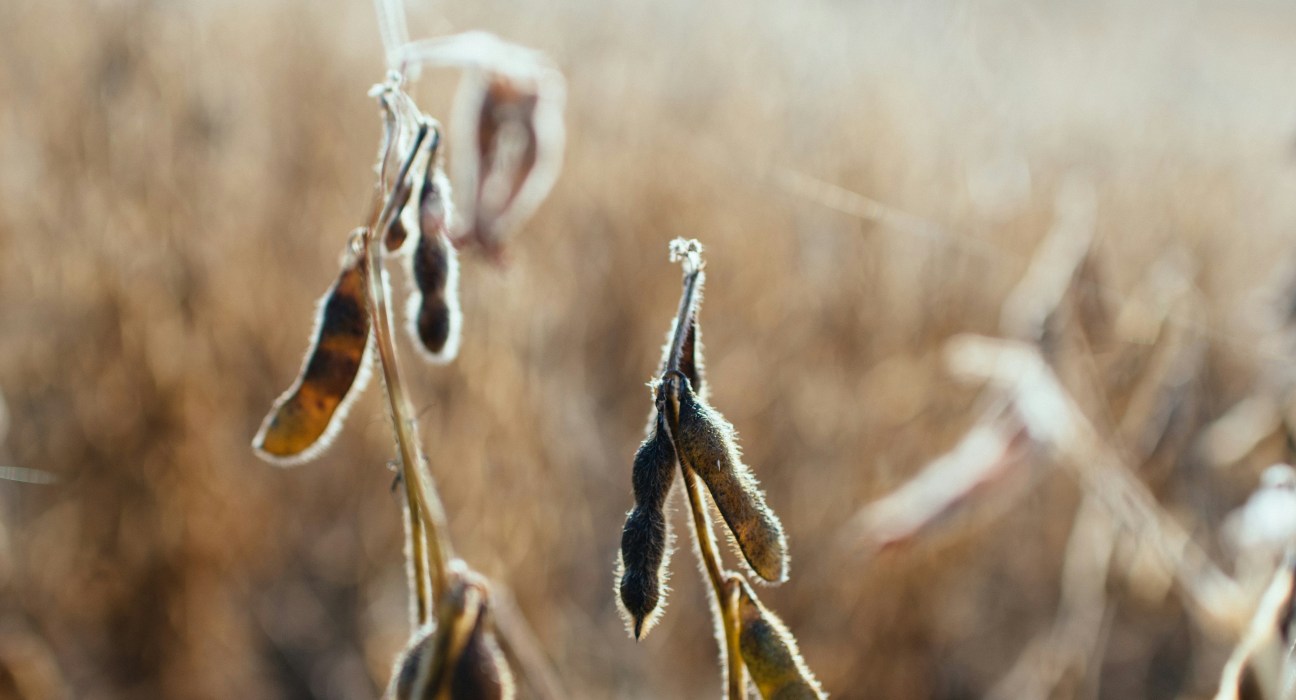
Purdue Study Finds Early-Planted Soybeans Yield More, Even With Residual Herbicides

Field experiments conducted during 2024 and 2025 at three Purdue Agricultural Centers in Indiana found that early-planted soybean fields nearly always produced higher yields than mid- or late-planted fields, according to research published in the journal Weed Technology. The trials ran at sites near Wanatah, LaFayette and Butlerville, representing Indiana's northern, central and southern growing

Read More

Chonnam National University Builds AI System for Orchard Mapping

A team at Chonnam National University has published a study in the journal Artificial Intelligence in Agriculture describing a new AI framework that combines aerial drone imagery with ground-based LiDAR data to build detailed digital models of commercial orchards. The research targets a common problem in orchard robotics: getting reliable localization and mapping in environments

Read More

Weed Science Society of America Study Finds Higher Rye Seeding Rates Improve Weed Suppression

A study published in Weed Science, a journal of the Weed Science Society of America (WSSA), found that a cereal rye cover crop helps reduce weed pressure in organic no-till soybean production, particularly when seeded at higher rates. The two-year study reviewed field experiments conducted during the 2021-2022 and 2022-2023 growing seasons near Rock Springs,

Read More

NPEC Secures €5.4 Million ($6.2 Million) for Five-Year Plant Phenotyping Facility Upgrade

The Netherlands Plant Eco-phenotyping Centre (NPEC) has been awarded funding through the NWO Large-Scale Research Infrastructure Upgrade call to carry out a major five-year upgrade of its national plant phenotyping facility. The upgrade is intended to expand and modernize NPEC's capabilities, strengthening research into how plants grow and respond to their environment, with relevance to

Read More