
Key Takeaways
- The Netherlands Plant Eco-phenotyping Centre (NPEC) has been awarded funding through the NWO Large-Scale Research Infrastructure Upgrade call for a five-year upgrade of its national facility.
- The total NPEC 2.0 project budget is €5.4 million (roughly $6.2 million), awarded to Wageningen University & Research (WUR) and Utrecht University (UU), with additional institutional support from WUR, UU and the Jan IngenHousz Institute.
- New investments include open-air Ecotron units, a full-field X-ray fluorescence camera described as the first of its kind in a high-throughput growth chamber worldwide, and drones equipped with soil moisture and hyperspectral sensors.
- Since launching in 2018, NPEC has supported hundreds of experiments and generated more than 250 terabytes of phenotyping data.
- The five-year NPEC 2.0 programme begins in autumn 2026.
NPEC Secures Funding for Five-Year Facility Upgrade
The Netherlands Plant Eco-phenotyping Centre (NPEC) has been awarded funding through the NWO Large-Scale Research Infrastructure Upgrade call to carry out a major five-year upgrade of its national plant phenotyping facility. The upgrade is intended to expand and modernize NPEC's capabilities, strengthening research into how plants grow and respond to their environment, with relevance to food security, climate resilience and biodiversity.
The NWO funding was awarded to Wageningen University & Research (WUR) and Utrecht University (UU). The total NPEC 2.0 upgrade budget of €5.4 million, or roughly $6.2 million at current exchange rates, is further supported by institutional contributions from WUR, UU and the Jan IngenHousz Institute (JII), an independent photosynthesis research institute based at Wageningen Campus.
NPEC New Equipment and Capabilities
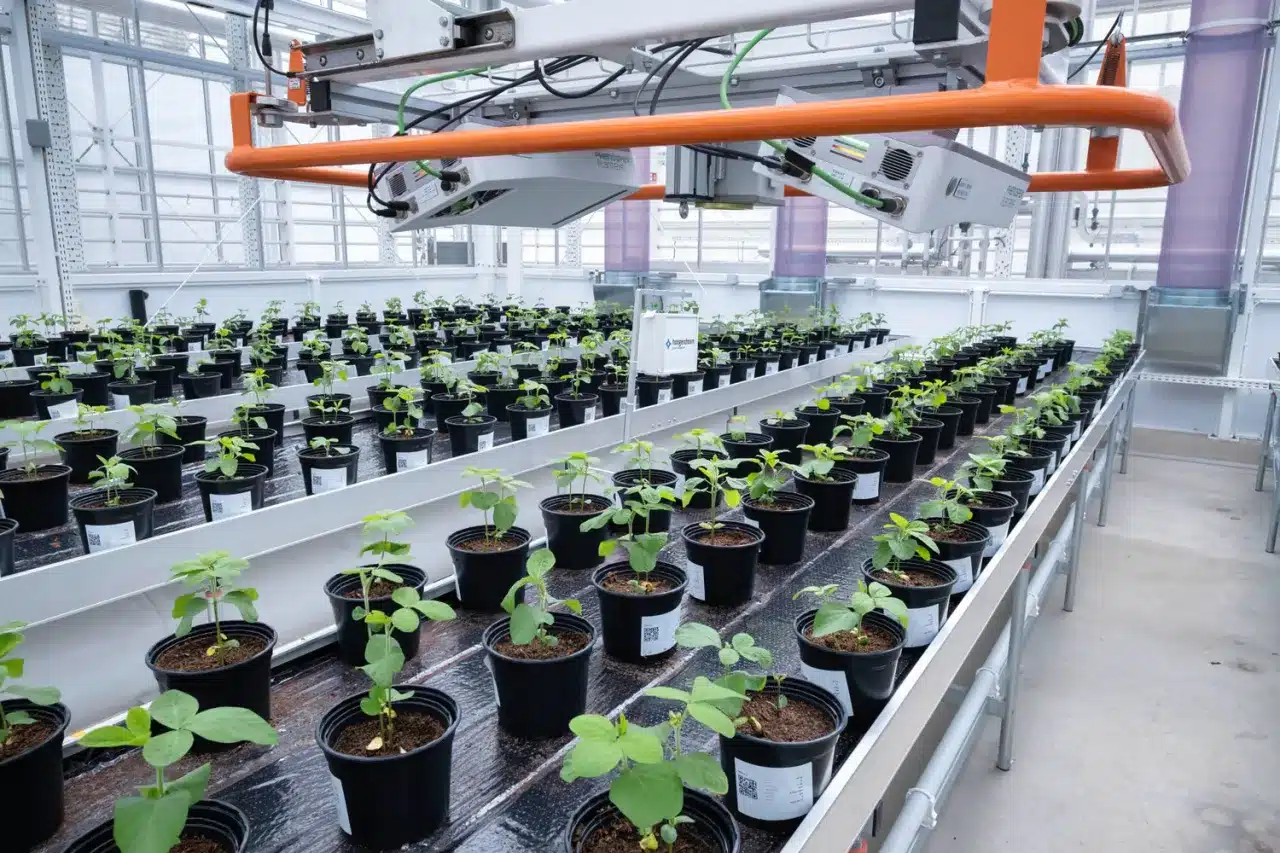
NPEC is a national plant eco-phenotyping facility that allows scientists to measure how plants grow and respond to their environment across a range of conditions, from Petri dish to field and from controlled to fully natural settings. The approved upgrade addresses three needs: new equipment to improve speed and accuracy, the integration of machine learning and artificial intelligence into the facility's data infrastructure, and a reinforced operational team to support the new tools.
Planned investments include open-air Ecotron units for ecologically realistic outdoor experiments, an intact soil core extractor to fill those units, a full-field X-ray fluorescence camera for non-invasive elemental imaging of living plants — described as the first of its kind in a high-throughput growth chamber worldwide — and next-generation drones equipped with soil moisture sensors and hyperspectral imaging technology for field phenotyping.
Data Science and AI Integration
Newly appointed data science specialists will build automated pipelines and standardized tools to help researchers extract value from the facility's datasets, supporting the transition to new machine learning and artificial intelligence analysis methods.
“This upgrade will transform NPEC from a high-quality data-generating platform into an even more versatile, intelligent decision-support engine for the green life sciences,” said Prof. dr. Mark Aarts of Wageningen University & Research, main applicant of the NPEC 2.0 upgrade. “With these new capabilities, we can meet the increasing demand in the plant sciences domain for more detailed, time-resolved measurements of plant performance in controlled and natural conditions. We can also better assist researchers in interpreting the vast amount of data typically obtained in modern plant phenotyping.”
Track Record Since 2018
Since launching in 2018, NPEC has supported hundreds of experiments, generated more than 250 terabytes of phenotyping data, and contributed to numerous peer-reviewed publications and student theses. The facility has supported research ranging from individual PhD projects to larger initiatives such as the National Growth Fund project CropXR and the Jan IngenHousz Institute.
NPEC is jointly operated by WUR and UU and serves as the Dutch national node of EMPHASIS, the European plant phenotyping infrastructure on the European Strategy Forum on Research Infrastructures (ESFRI) roadmap. The upgraded facility will serve researchers across academia, industry and the public sector. The five-year NPEC 2.0 programme begins in autumn 2026.

